Understanding the Weak Points in Commercial Entrances
Every building has weak points, and most of the time, they start with the main entrance. Aluminum storefront doors, steel fire exits, loading dock roll-ups, office corridor doors—each one ages differently. In Etobicoke, especially, with the mix of older industrial buildings and newer commercial plazas, there’s a wide variety of door types and conditions. Many owners are surprised when a small shift in the frame or a loose hinge ends up causing lock misalignment, meaning the door never actually locks properly, even though the key turns. That small separation becomes an easy point of entry for break-ins or, in some cases, a safety violation if it’s a fire exit.
High-Traffic Door Problems Most Businesses Ignore
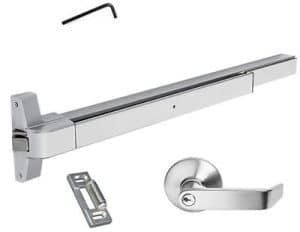
Walk into any coffee shop, clinic, warehouse, or office building in Toronto, and you’ll see the same issue: constant use. Doors get slammed, propped open, pushed by carts, or leaned on during deliveries. Over time, closers lose tension, glass doors wobble, panic bars stick, and key cylinders collect dirt until they jam. These aren’t “maintenance problems”—they’re early warning signs. When customers or staff have to yank a door to get it open or kick it to get it shut, the hardware is already failing. Ignoring it just means one morning the door won’t open at all, or worse, it won’t lock when you’re trying to close up.
Modern Locking Solutions for Busy Commercial Spaces
Technology has changed the way businesses control access. In many Etobicoke offices and retail units, we’re seeing a shift from basic keys to digital access systems, including punch-code locks, keypads, smart readers, and even hybrid mechanical-electrical systems that don’t rely on full WiFi setups. For businesses with shift rotations or high employee turnover, these systems are far more practical than rekeying locks every time someone leaves. They also solve the “Who has the key?” problem, something every Toronto business owner has faced at some point.