Commercial & Industrial Lock Solutions for Etobicoke

Why Secure Business Doors Matter More Than Ever

Running a business in Etobicoke or anywhere in Toronto means juggling a lot of moving parts, and security is one of those things that never seems urgent until something happens. Most business owners assume their doors, locks, and hardware are “fine” because they still open and close. But commercial buildings face a different level of wear compared to homes—heavy foot traffic, varied employee access, weather exposure, and equipment movement all impact the condition of your doors far faster than you think. When a storefront door starts dragging on the frame or a warehouse latch doesn’t sit flush anymore, that’s not just a nuisance; it’s a sign that security and safety are already compromised.

Understanding the Weak Points in Commercial Entrances

Every building has weak points, and most of the time, they start with the main entrance. Aluminum storefront doors, steel fire exits, loading dock roll-ups, office corridor doors—each one ages differently. In Etobicoke, especially, with the mix of older industrial buildings and newer commercial plazas, there’s a wide variety of door types and conditions. Many owners are surprised when a small shift in the frame or a loose hinge ends up causing lock misalignment, meaning the door never actually locks properly, even though the key turns. That small separation becomes an easy point of entry for break-ins or, in some cases, a safety violation if it’s a fire exit.

High-Traffic Door Problems Most Businesses Ignore

Walk into any coffee shop, clinic, warehouse, or office building in Toronto, and you’ll see the same issue: constant use. Doors get slammed, propped open, pushed by carts, or leaned on during deliveries. Over time, closers lose tension, glass doors wobble, panic bars stick, and key cylinders collect dirt until they jam. These aren’t “maintenance problems”—they’re early warning signs. When customers or staff have to yank a door to get it open or kick it to get it shut, the hardware is already failing. Ignoring it just means one morning the door won’t open at all, or worse, it won’t lock when you’re trying to close up.

Modern Locking Solutions for Busy Commercial Spaces

Technology has changed the way businesses control access. In many Etobicoke offices and retail units, we’re seeing a shift from basic keys to digital access systems, including punch-code locks, keypads, smart readers, and even hybrid mechanical-electrical systems that don’t rely on full WiFi setups. For businesses with shift rotations or high employee turnover, these systems are far more practical than rekeying locks every time someone leaves. They also solve the “Who has the key?” problem, something every Toronto business owner has faced at some point.

kaba

Upgrading Outdated Hardware: When “Good Enough” Isn’t Safe

If your business is operating with the original door hardware from 10, 15, or 20 years ago, it’s probably time to take a serious look at upgrading. Older cylinders wear out, older panic bars no longer meet updated fire codes, and older door closers leak oil to the point where the door slams hard instead of closing smoothly. In industrial units throughout Etobicoke—especially around areas like Claireport, Islington, Lake Shore, and The Queensway—many units still rely on outdated hardware that simply wasn’t designed for modern use. Upgrading doesn’t just improve security; it reduces maintenance costs, improves accessibility, and protects your insurance compliance.

Industrial-Grade Door Systems Built for Heavy Use

Industrial facilities deal with heavy-duty challenges: forklifts, rolling carts, temperature fluctuations, and oversized doors all stress the hardware constantly. Sectional doors, metal roll-ups, and reinforced steel fire doors need a different level of care and installation. A small bend in a warehouse door track can stop an entire operation, especially if it’s your loading bay. In manufacturing and logistics spaces across Toronto, secure, smooth-operating door systems aren’t just nice to have—they’re essential for keeping operations running safely and efficiently.

How Professional Locksmiths Improve Business Continuity

A reliable commercial locksmith isn’t just someone you call when you’re locked out. They’re the ones who make sure your building keeps functioning day after day. When a door doesn’t latch, when a panic bar needs replacement, when a lock starts sticking, or when you move into a new unit and need everything rekeyed, the right locksmith ensures your business doesn’t lose hours—or days—of productivity. Etobicoke businesses often operate under tight deadlines and regular customer flow, so having someone who can handle hardware repairs, access control adjustments, and emergency lockouts quickly becomes invaluable.

Emergency Situations in Commercial Buildings & How to Prevent Them

Emergency lockouts, broken storefront latches, jammed office doors, malfunctioning panic bars—these issues show up at the worst possible time. A staff member arrives early to open and can’t get inside. A manager tries to lock up at night and finds the key won’t turn. A warehouse door suddenly won’t shut, leaving expensive inventory exposed. Preventing these situations isn’t complicated; it’s about regular checks, making sure closers have proper pressure, keeping cylinders clean, and replacing failing components before they break entirely. A little proactive care saves a lot of headaches.

Keyless and Smart Access Control for Multi-Employee Workplaces

For businesses in Toronto with multiple employees entering at different hours, code-based and card-based systems are becoming the new standard. They allow updates without changing hardware and give more control over who enters what area. Server rooms, storage rooms, supervisor offices, and staff entrances benefit greatly from these systems. Plus, with the rise of flexible work hours in Etobicoke, access control becomes even more important when the building isn’t always staffed.

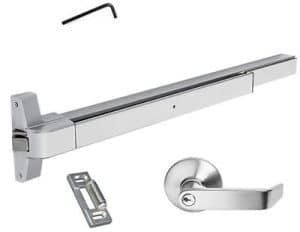
push bar exit

Maintenance Routines Every Business Should Follow

Every business should have a simple routine: check the doors monthly, test locks for smooth operation, make sure closers aren’t leaking, listen for grinding sounds on storefront doors, and confirm panic bars engage properly. These quick checks take minutes but prevent costly breakdowns. Many business owners only realize the importance of maintenance after their first emergency call.

Final Thoughts: Building a Safer, More Secure Workplace

Whether you’re running a storefront on Dundas, a clinic near Kipling, a warehouse by the 427, or an office anywhere in Toronto, your doors and locks are part of your building’s backbone. When they work well, nobody notices. When they fail, everything stops. Good security isn’t just about preventing crime—it’s about keeping your business moving, protecting employees, meeting fire code, and ensuring that customers and staff can safely access your space.